
Dial Gauge
Showing all 10 results
-

Dasqua (5111-1005) 10mm Dial Indicator Gauge
5,000.00৳ Add to cart -

Dasqua 60KG Hold Power Magnetic Base Italy
4,000.00৳ Add to cart -
Sale!

Dial gauge indicator 0.01-0.25mm in Bangladesh
Original price was: 3,500.00৳ .3,400.00৳ Current price is: 3,400.00৳ . Add to cart -
Sale!
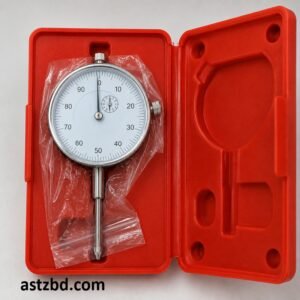
Dial gauge indicator 0.01-0.50mm in Bangladesh
Original price was: 9,500.00৳ .9,000.00৳ Current price is: 9,000.00৳ . Add to cart -
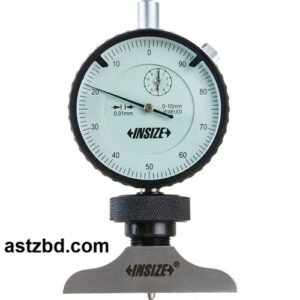
Insize (2341-101A) 10mm Dial Depth Gauge
10.00৳ Add to cart -

Insize (2342-202) 300mm Dial Depth Gauge
10.00৳ Add to cart -
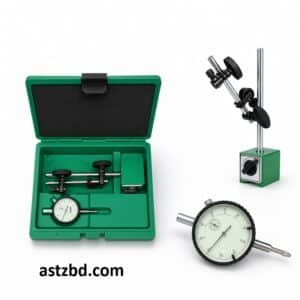
Insize 5024 2-Piece Measuring Tool Set – Dial Indicator & Magnetic Stand
6,000.00৳ Add to cart -
Sale!
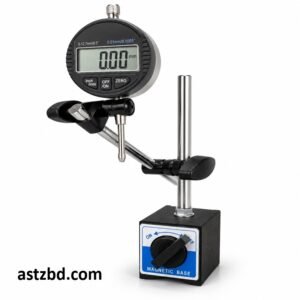
Magnetic Stand base with Digital indicator
Original price was: 4,500.00৳ .4,200.00৳ Current price is: 4,200.00৳ . Add to cart -
Sale!
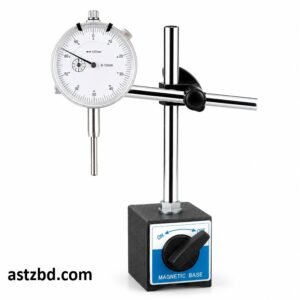
Magnetic Stand with Dial Gauge 0-10mm 0.01mm (60 kg Base) Heavy-Duty Precision Measurement Set for Workshop & Lab
Original price was: 4,500.00৳ .4,000.00৳ Current price is: 4,000.00৳ . Add to cart -
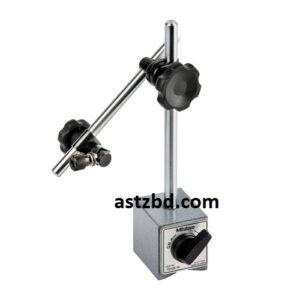
Mitutoyo magnetic stand base with dial gauge Japan
3,000.00৳ Add to cart


Dial Gauge Price in Bangladesh – Buy Genuine Dial Indicators for Precision Measurement
The Dial Gauge Price in Bangladesh starts from ৳3,400 at astzbd.com, with genuine Dasqua and Insize models covering measuring ranges from 0.01mm to 0.50mm — everything a workshop, lab, or field engineer needs for accurate linear measurement. A dial gauge might look like a simple mechanical tool, but the wrong resolution or a mismatched mounting stem can throw off an entire quality control process, so getting the specification right matters more than most first-time buyers expect.
Dial Gauge Overview – Precise Linear Measurement for Engineering & Machining
A dial gauge, also called a dial indicator, measures tiny linear displacements — surface flatness, shaft runout, alignment deviation — and displays the result on an analog dial face. It’s a staple tool across machining, civil testing labs, and automotive workshops precisely because it doesn’t need batteries and gives an immediate, tactile reading you can trust on any job site.
How Does a Dial Gauge Work?
Spindle & Plunger Mechanism
A spring-loaded spindle moves in and out as it contacts a surface, converting that linear motion into the input for the gauge’s internal mechanism.
Gear Train Amplification
Inside the housing, a precision gear train amplifies the spindle’s small movement into a larger, easily readable rotation of the dial needle.
Dial Face Reading & Resolution
The dial face is graduated in fine increments — commonly 0.01mm — so even a tiny surface variation shows up clearly as needle movement.
Types of Dial Gauges We Offer
Plunger Type Dial Indicator
The Dasqua 10mm Dial Indicator Gauge, priced at ৳5,000, is the standard plunger-style design most commonly used for general workshop and lab measurement.
Lever/Test Dial Indicator
Lever-type indicators work well in tight spaces where a standard plunger gauge can’t reach, useful for confined machining or assembly checks.
Dial Gauge with Magnetic Base Holder
The Insize 5024 2-Piece Measuring Tool Set at ৳6,000 bundles a dial indicator with a magnetic stand, giving you a complete, ready-to-use setup out of the box.
Long-Range vs Standard-Range Dial Indicators
Standard-range models like the Dial Gauge Indicator 0.01–0.25mm at ৳3,400 suit everyday checks, while the Dial Gauge Indicator 0.01–0.50mm at ৳9,000 covers larger displacement measurement for heavier machining tasks.
Key Features to Look for in a Dial Gauge
Measuring Range (0.01mm–0.50mm and Beyond)
Match the range to your actual task — a 10mm plunger travel range covers most general measurement, while specialized work may need the extended 0.50mm graduation range.
Resolution & Graduation Accuracy
Finer graduation means better sensitivity to small surface changes, which matters more for precision machining than for rough alignment checks.
Dial Face Size & Readability
A larger dial face is easier to read at a glance, especially useful when you’re checking measurements repeatedly across a long shift.
Bezel Type (Rotating & Lug Back Mount)
A rotating bezel lets you zero the dial at any starting point, while a lug-back mount style determines how the gauge attaches to your stand or fixture.
Stem Diameter & Mounting Compatibility
Standard stem diameters ensure the gauge fits common magnetic bases and stands without needing a separate adapter.
Build Material (Body & Contact Point)
A metal body with a hardened contact point holds up better under repeated daily use than lighter, less durable alternatives.
Dial Gauge Full Specification
| Category | Parameter | Typical Range (Our Stock) |
|---|---|---|
| Measuring Range | Standard Models | 0.01mm – 0.25mm |
| Measuring Range | Extended Models | 0.01mm – 0.50mm |
| Graduation | Resolution | 0.01mm |
| Mounting | Magnetic Base Holding Power | Up to 60KG (Dasqua Italy) |
| Build | Body Material | Metal housing, hardened contact point |
| Dial | Face Type | Analog, rotating bezel |
Why Precision Matters in Dial Gauge Measurement
A dial gauge is often the last check before a part passes or fails quality control — a shaft with too much runout, a surface that isn’t flat enough, or a machine bed that’s slightly misaligned all get caught here. Because the tool has no digital processing between the mechanical movement and the reading, the Dial Gauge Price in Bangladesh reflects genuine precision engineering, not electronics, which is exactly why it remains trusted in workshops that can’t afford measurement drift.
Dial Gauge vs Digital Dial Indicator – Which One to Buy?
| Feature | Mechanical Dial Gauge | Digital Dial Indicator |
|---|---|---|
| Readability | Analog needle, requires practice | Instant digital number |
| Accuracy | Excellent, no battery dependency | Excellent, but battery-reliant |
| Price Range (BD) | ৳3,400 – ৳9,000 | Similar or higher |
| Best For | Daily workshop use, no power needed | Quick readouts, data logging |
For anyone working in environments where battery reliability is a concern — field sites, older workshops without constant power access — a mechanical dial gauge remains the safer long-term choice. If instant digital readouts matter more, the Magnetic Stand Base with Digital Indicator at ৳4,200 covers that need.
Dial Gauge Price in Bangladesh
The Dial Gauge Price in Bangladesh ranges from ৳3,400 to ৳9,000 depending on measuring range and included accessories. At astzbd.com, the Dial Gauge Indicator 0.01–0.25mm starts at ৳3,400, the Dasqua 60KG Magnetic Base is ৳4,000, the Magnetic Stand Base with Digital Indicator is ৳4,200, the Dasqua 10mm Dial Indicator Gauge is ৳5,000, the Insize 5024 2-Piece Set is ৳6,000, and the extended-range Dial Gauge Indicator 0.01–0.50mm tops the range at ৳9,000.
What Affects the Price (Range, Brand, Accuracy Grade)
Measuring range is the biggest price driver — extended-range indicators cost more to manufacture and calibrate accurately. Branded units like Dasqua and Insize also carry a premium for consistent build quality and proven durability under repeated use.
Why Buy Genuine Dial Gauges from astzbd.com
Every dial gauge sold at astzbd.com is genuine stock with proper warranty backing, unlike unverified sellers who may sell miscalibrated units with no accuracy guarantee or after-sales support.
Who Should Buy a Dial Gauge?
Mechanical & Civil Engineers
Verifying surface flatness and alignment tolerances is a routine part of structural and mechanical inspection work.
Machinists & Workshop Technicians
Setting up machine tools accurately depends on catching runout and misalignment before production begins.
Laboratory & Quality Control Inspectors
Consistent, repeatable measurement is essential for QC sign-off across manufactured parts and assemblies.
Automotive Repair Technicians
Checking brake disc runout, crankshaft alignment, and other tight-tolerance automotive components relies on dial gauge accuracy.
How to Use a Dial Gauge – Quick Setup Guide
- Mount the dial gauge securely on a magnetic base or fixed stand
- Position the plunger tip against the surface you’re measuring
- Rotate the bezel to zero the dial at your starting reference point
- Move the part or gauge slowly and read the needle deflection
- Record the maximum and minimum readings to determine total variation
Dial Gauge Maintenance & Care Tips
Keep the plunger mechanism free of dust and debris by wiping it down after each use, avoid dropping the unit since internal gear trains are sensitive to shock, and store it in a protective case when not in use. Periodically check the gauge against a known flat reference surface to catch any calibration drift early.
Dial Gauge FAQ
What is the standard measuring range of a dial gauge?
Standard ranges typically run from 0.01mm to 0.25mm, with extended models covering up to 0.50mm for larger displacement measurement.
How accurate is a mechanical dial indicator?
Quality mechanical dial gauges offer graduation accuracy down to 0.01mm, making them reliable for most engineering and workshop precision tasks.
What is a dial gauge magnetic holder used for?
A magnetic holder secures the dial gauge firmly in place on a metal surface, keeping it stable during measurement without needing a separate clamp stand.
Can a dial gauge be used for runout testing?
Yes, dial gauges are commonly used to measure shaft and disc runout by mounting the gauge against the rotating component and tracking needle deflection.
How long does a dial gauge last with proper care?
With regular cleaning and careful handling, a good quality mechanical dial gauge can remain accurate and functional for many years of daily workshop use.