
Description
Standard Penetrometer Price in Bangladesh – Buy Genuine Soil & Bitumen Testing Equipment
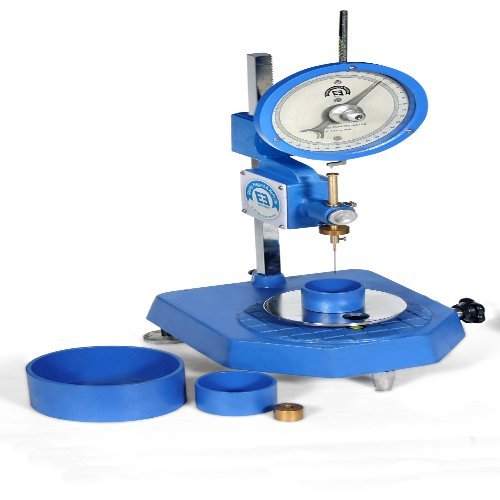
The penetrometer price in Bangladesh reflects a precision testing instrument, and astzbd.com stocks a genuine standard penetrometer built for both bitumen consistency testing and soil penetration work. If your lab depends on accurate, repeatable penetration readings, this standard penetrometer apparatus delivers the mechanical precision that quick, improvised testing methods simply can’t match.
Standard Penetrometer – Full Specification
| Category | Parameter | Specification |
|---|---|---|
| Compliance | Testing Standards | IP 49, IP 50, IP 167; IS 1448 (Part 60) & (Part 93) |
| Application | Use Case | Penetration testing on a wide variety of materials |
| Build | Head Support | Mounted on a vertical rod, height-adjustable |
| Mechanism | Adjustment System | Rack and pinion with pointer assembly |
| Mechanism | Fine Adjustment | Precise positioning of needle tip to sample surface |
| Mechanism | Clutch Type | Slipping clutch mechanism for accurate reading and reset |
| Dial | Range | 0 to 400 |
| Dial | Sub-Division | 1/10 mm (one-tenth millimeter) |
| Included Accessories | Sample Containers | 2 pieces |
| Included Accessories | Weights | 2 pieces |
Standard Penetrometer Overview – Precision Penetration Testing Instrument
A standard penetrometer measures how far a needle or cone penetrates a material under a controlled load and time period, giving engineers a standardized way to assess consistency, hardness, or bearing capacity. Whether you’re testing bitumen for road construction or evaluating soil samples in a geotechnical lab, this instrument turns a subjective “feel test” into a documented, repeatable measurement.
What Is a Penetrometer Used For?
Bitumen/Asphalt Penetration Testing (ASTM D5, IS 1203)
Penetration testing on bitumen follows recognized standards like ASTM D5 and IS 1203, measuring how deep a standard needle sinks into a bitumen sample under a fixed load and time — a core quality check before road-grade bitumen gets approved for use.
Soil Consistency & Bearing Capacity Testing
Beyond bitumen, a penetrometer helps evaluate soil consistency and estimate bearing capacity, giving geotechnical engineers a quick reference point before committing to more extensive site investigation.
Why “Standard” Penetrometer Differs from Pocket/Dynamic Types
A standard penetrometer is a benchtop instrument built for controlled lab conditions, unlike a pocket penetrometer, which trades precision for portability, or a dynamic cone penetrometer, which is designed specifically for in-situ soil testing in the field rather than lab bitumen work.
How Does a Standard Penetrometer Work?
Needle Penetration Mechanism
A needle assembly, loaded with a specific weight, is released to penetrate the sample vertically under gravity, with the resulting depth recorded once the needle comes to rest.
Load, Time & Temperature Control Principle
Standardized tests specify exact load weight, penetration time, and sample temperature, since all three variables directly affect how far the needle travels — controlling them is what makes results comparable across labs.
Reading the Penetration Depth Scale
A calibrated dial or digital display converts the needle’s vertical travel into a penetration depth reading, typically expressed in tenths of a millimeter for bitumen testing.
Standard Penetrometer Key Features
Needle/Cone Penetration Depth Measurement (0.1mm Precision)
Fine-resolution measurement down to 0.1mm ensures the instrument captures meaningful differences between samples rather than rounding away the detail that actually matters for quality control.
Adjustable Load Weights (50g, 100g, 200g)
Interchangeable load weights let the same instrument run multiple standardized test configurations without needing separate equipment for each protocol.
Timer & Release Mechanism
A built-in timer paired with a precise release mechanism ensures the needle drops exactly when intended and for the correct duration, removing manual timing error from the result.
Leveling Base & Stability Design
A stable, adjustable base keeps the instrument perfectly level during testing, since even slight tilt can skew how the needle penetrates the sample.
Digital vs Analog Dial Display
Whether reading from a traditional analog dial or a digital display, the goal is the same — a clear, accurate penetration depth reading that’s easy to record without misinterpretation.
Why Accurate Penetration Readings Matter in Material Testing
A penetration reading that’s off by even a few tenths of a millimeter can mean the difference between bitumen passing or failing a specification grade, or a soil sample being misclassified for bearing capacity purposes. This is exactly why the penetrometer price in Bangladesh for a genuine, precisely calibrated unit is worth paying over an unverified alternative — a small manufacturing tolerance error compounds into real project risk down the line.
Standard Penetrometer vs Pocket Penetrometer – Which One to Buy?
| Feature | Pocket Penetrometer | Standard Penetrometer |
|---|---|---|
| Precision | Lower, quick-check level | High, 0.1mm resolution |
| Application | Field spot checks | Lab-grade bitumen and soil testing |
| Portability | Highly portable | Benchtop, stationary |
| Price Range (BD) | Lower | Higher |
| Best For | Quick field estimates | Standardized, documented quality control |
If you need quick field estimates on soil consistency, a pocket penetrometer covers that need affordably. For lab-grade bitumen quality control or documented compliance testing, the standard penetrometer’s precision and repeatability are essential. For in-situ soil bearing capacity assessment specifically, the Cone Penetrometer (CPT) at ৳22,000 is purpose-built for that application rather than lab bitumen testing.
Standard Penetrometer Price in Bangladesh
The penetrometer price in Bangladesh for the standard model is available at astzbd.com — contact astzbd.com directly for current pricing. For comparison, the Cone Penetrometer (CPT) used for field soil testing is priced at ৳22,000.
What Affects the Price (Precision, Load Range, Digital Features, Brand)
Measurement precision and available load weight configurations are the biggest price factors — a unit offering finer resolution and multiple standardized load options costs more to manufacture than a basic single-configuration model. Digital display features and brand reliability further influence final pricing.
Why Buy Genuine Standard Penetrometer from astzbd.com
astzbd.com stocks genuine, properly calibrated penetrometers with verified accuracy, protecting your lab from unverified alternatives that can produce inconsistent, non-compliant test results.
Who Should Buy a Standard Penetrometer?
Road & Highway Construction Engineers
Bitumen grade verification before road construction depends on consistent, standard-compliant penetration testing to confirm material specifications are met.
Bitumen & Asphalt Quality Control Labs
Routine batch testing requires an instrument capable of repeatable, documented results across multiple daily samples.
Geotechnical & Soil Testing Laboratories
Soil consistency assessment benefits from the standard penetrometer’s controlled testing environment, distinct from field-based cone penetration work handled by instruments like the Cone Penetrometer (CPT).
University Civil Engineering Departments
Teaching labs rely on durable, accurate penetrometers to demonstrate standardized material testing concepts to students across repeated coursework sessions.
How to Use a Standard Penetrometer – Testing Guide
- Level the instrument base and prepare the sample at the specified test temperature
- Select and attach the appropriate load weight for your testing standard
- Position the needle at the sample surface and zero the depth reading
- Release the needle for the standardized time duration (typically 5 seconds)
- Record the penetration depth from the dial or digital display
- Repeat testing at multiple points for a representative average result
Standard Penetrometer Maintenance & Calibration Tips
Clean the needle after every test to prevent residue buildup from affecting future readings, store the instrument in a stable, dust-free environment, and periodically verify the leveling base and release mechanism for consistent performance. Regular calibration checks against a certified reference standard help catch any drift before it compromises test compliance.
Standard Penetrometer FAQ
What is a penetrometer used for in construction?
A penetrometer measures material consistency by recording how far a needle or cone penetrates under controlled load and time, commonly used for bitumen quality testing and soil evaluation in construction and civil engineering.
What is the standard penetration test needle size?
Standard bitumen penetration testing typically uses a needle with dimensions specified under ASTM D5 and IS 1203, ensuring consistent, comparable results across different labs and testing sessions.
How is a standard penetrometer different from a dynamic cone penetrometer?
A standard penetrometer is a benchtop lab instrument for controlled bitumen and soil consistency testing, while a dynamic cone penetrometer like the Cone Penetrometer (CPT) is designed for in-situ field testing of soil bearing capacity.
What load weight is used for bitumen penetration testing?
Standard bitumen testing commonly uses a 100g load applied for 5 seconds, though adjustable weight options like 50g and 200g accommodate different testing protocols.
How often should a penetrometer needle be calibrated or replaced?
Needles should be inspected regularly for wear or damage and replaced when readings become inconsistent, while the full instrument should undergo calibration verification periodically to maintain testing accuracy.
Warranty & After-Sales Support (astzbd.com)
Every standard penetrometer purchased from astzbd.com comes with verified calibration accuracy and dedicated after-sales support, ensuring reliable testing results for your lab or construction project.



Reviews
There are no reviews yet.